Skip to content

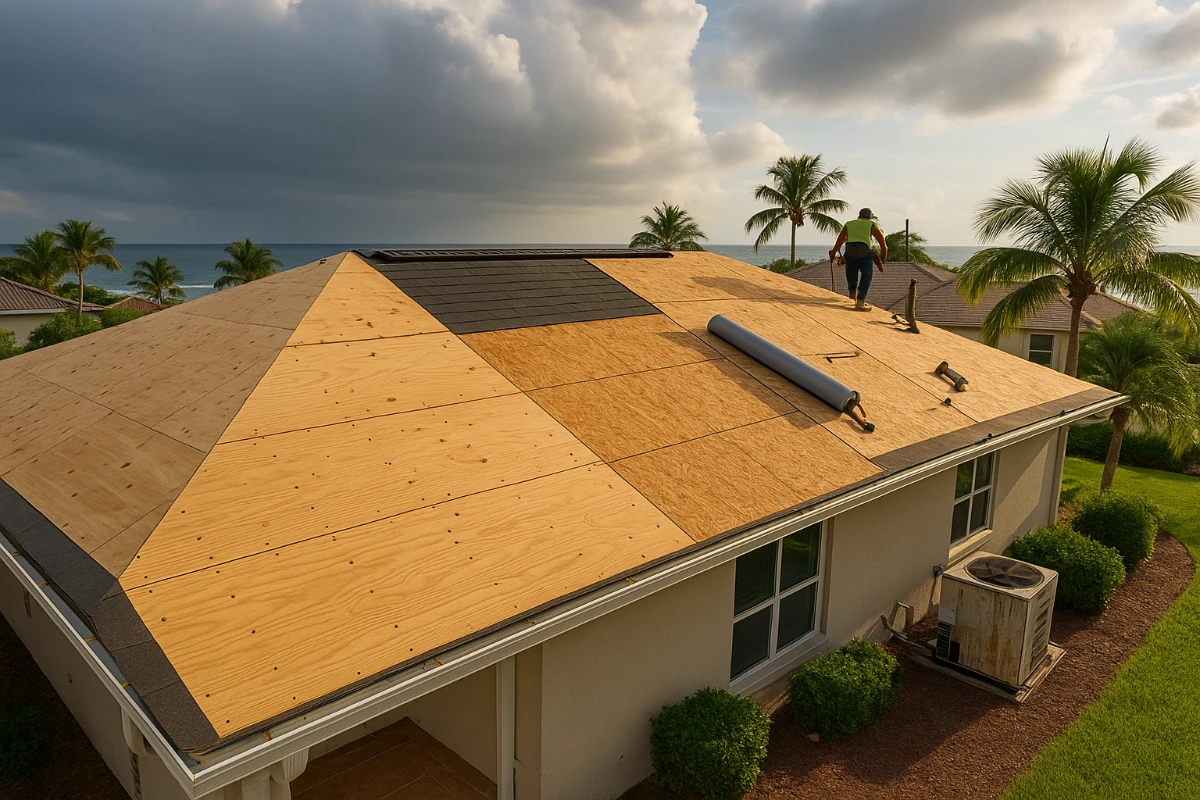
Roof decking is one of those hidden parts of your home that you rarely think about until it fails. The solid base that supports your roofing materials, roofing decking keeps everything above your head stable and secure.
In Florida, that job isn’t easy. Constant humidity, summer downpours, and tropical storms create conditions that can wear down even the strongest building materials. That’s why the type of decking beneath your roof matters just as much as the shingles or tiles you see on top.
Two of the most common choices for roof decking are oriented strand board (OSB) and plywood. Both are engineered wood products used across countless homes, but they react differently to moisture and heat. Understanding those differences can help Florida homeowners choose a roof deck that lasts and keeps their roof performing well through years of humidity and storms.
The Role of Roof Decking in Florida Homes
Every strong roof starts with a dependable deck. Roof decking connects the trusses or rafters beneath your roof and provides a stable surface for underlayment and shingles. When installed correctly, it distributes the weight of the roof evenly and helps protect the structure from wind and moisture.
In Florida, the decking also serves as the first line of defense against the state’s humid climate. Persistent moisture can cause unsealed wood to swell, warp, or rot over time. Even small leaks or trapped condensation can weaken the deck and shorten the lifespan of the roof above it.
Because of this, Florida’s building codes set specific standards for roof decking materials and installation. These regulations help ensure that homes can withstand both high humidity and the wind-driven rain that comes with tropical weather. Choosing the right material for the deck is not just about durability. It is about protecting the entire roofing system from long-term damage.
Understanding the Materials
When it comes to roof decking, most Florida homeowners will encounter two main options: oriented strand board (OSB) and plywood. Both serve the same purpose, but they’re built differently and respond to moisture in their own ways.
OSB (Oriented Strand Board)

OSB is made from small wood strands mixed with resin and compressed into large sheets under heat and pressure. The result is a uniform panel that’s consistent in thickness and strong enough to handle heavy loads. It’s widely used because it’s more affordable and makes efficient use of raw materials. However, OSB tends to absorb and retain moisture longer than plywood, which can lead to swelling along the edges if not properly sealed.
Plywood
Plywood is constructed from thin layers of wood veneer that are glued together with alternating grain directions. This cross-laminated structure gives it excellent strength and resistance to warping. Plywood usually costs more than OSB, but it has a proven track record of performing well in areas where humidity and rainfall are constant challenges. Its layered design also helps it dry out faster after exposure to moisture.
Both materials can support a roof effectively when installed and maintained correctly, but the real test begins when Florida’s humidity comes into play.
OSB vs Plywood for Roofing
| Category | OSB (Oriented Strand Board) | Plywood |
|---|---|---|
| How it’s made | Small wood strands + resin, compressed under heat and pressure | Thin wood veneers glued in layers with alternating grain direction |
| Panel consistency | Very uniform thickness and consistent performance | Strong and stable due to cross-laminated structure |
| Strength / load handling | Strong enough to handle heavy loads | Excellent strength and resistance to warping |
| Cost | More affordable | Typically costs more |
| Moisture behavior | Absorbs and retains moisture longer | Dries out faster after moisture exposure |
| Common moisture issue | Edges may swell if not properly sealed | Generally performs well in humid/rainy conditions |
| Best fit (humid climates) | Works well when installed correctly and protected from moisture | Strong choice where humidity and rainfall are ongoing challenges |
How Humidity Affects Each Material
Florida’s high humidity puts constant pressure on any wooden surface, and roof decking is no exception. The way each material handles moisture can determine how well the roof performs over time.
Moisture Resistance and Absorption
OSB and plywood both contain wood fibers that react to changes in moisture, but they behave differently. OSB tends to absorb water more slowly, yet once it does, it takes longer to dry. This can cause swelling at the edges or even delamination if the moisture lingers. Edge-sealed OSB panels can help reduce this issue, but the risk remains in consistently humid environments.
Plywood, on the other hand, absorbs and releases moisture more evenly. Its layered construction allows air to move through the wood more efficiently, helping it dry faster. That means it’s less likely to stay damp long enough for mold or rot to develop.
Long-Term Durability in Florida Conditions
The daily cycle of heat, humidity, and rain in Florida can cause wood materials to expand and contract. Over time, this movement can weaken decking that stays damp for too long. Plywood generally performs better under these conditions, holding its shape and strength through repeated exposure.
Still, even the best material can fail without proper ventilation or waterproofing. A roof with good airflow and quality underlayment will extend the life of either OSB or plywood. That combination helps prevent trapped humidity from turning into long-term damage.
Cost and Maintenance Considerations
Cost often drives the decision between OSB and plywood, but long-term maintenance should factor into the choice just as much.
- OSB is the more budget-friendly option, which is why many builders use it in new construction. It provides reliable strength for the price and is easy to install. However, because OSB is more prone to moisture retention, homeowners in Florida may face higher maintenance costs down the road. Once water penetrates the surface, OSB can stay swollen or lose its structural integrity, especially along the edges.
- Plywood usually costs more per sheet, but the investment can pay off over time. It resists swelling, dries faster, and is easier to repair if sections become damaged. For instance, a single plywood panel can sometimes be replaced without affecting the surrounding structure, while OSB damage may spread more quickly.
Homeowners should also consider how each material interacts with their roofing system. Roofs that have excellent ventilation and water barriers can extend the life of OSB. Still, in Florida’s humid environment, plywood tends to require less ongoing attention and provides a better return on investment over the long term.
Choosing the Right Material for Florida Homes

Picking between OSB and plywood is not just about comparing materials. It is about matching your roof’s needs to Florida’s unpredictable weather. Both options can perform well when installed correctly, but one will typically offer better resilience depending on your home’s conditions.
- Homes with strong attic ventilation and reliable underlayment can handle either material effectively. Ventilation helps reduce trapped moisture, while high-quality underlayment provides an added layer of protection from wind-driven rain.
- For homes near the coast or in areas where humidity lingers year-round, plywood often proves the safer long-term choice. It can handle daily temperature swings, coastal humidity, and summer storms without losing its structural strength.
If you are planning a new roof or replacement, talk with a licensed roofing company who understands Florida’s climate and building codes. They can evaluate your roof’s current condition and recommend the best decking for long-term durability.
The Lakeland Roofers You Can Trust
When it comes to choosing between OSB and plywood, the best decision often depends on how your roof was built and how it’s maintained. The team at Stronghold Roofing & Solar has worked with both materials on homes in Lakeland and throughout Central Florida, and understands how humidity, wind, and rain affect roof performance over time.
Stronghold’s experienced roofers inspect decking carefully during every repair or replacement project. If moisture damage, soft spots, or signs of swelling are found, they can recommend the most effective and lasting solution for your home. Whether you’re building a new roof or replacing an existing one, Stronghold provides the expertise and craftsmanship needed to keep your roof solid from the decking up.
For honest advice and dependable service, contact Stronghold Roofing & Solar to schedule a free roof estimate or consultation.
FAQs – OSB vs. Plywood Roof Decking
What is the main difference between OSB and plywood?
OSB is made from wood strands compressed with resin, while plywood is built from thin layers of wood veneer. Both are strong and reliable, but plywood tends to resist moisture better in humid climates like Florida.
How do I know if my roof decking is damaged?
Signs of roof decking damage include sagging areas, soft spots, water stains, or a musty odor in the attic. A professional roofer can confirm damage during an inspection and recommend repair or replacement options.
Can OSB be used for roofs in humid climates?
It can, but only with proper sealing and ventilation. In regions with consistent humidity, like most of Florida, plywood generally lasts longer and requires less maintenance.
How often should roof decking be inspected?
Most experts recommend having your roof inspected at least once a year, and after major storms. Regular inspections can help identify early signs of decking deterioration before they lead to leaks or structural problems.
Does roof ventilation affect how long decking lasts?
Good ventilation allows moisture and heat to escape from the attic, which prevents trapped humidity from weakening the roof decking over time.