Skip to content

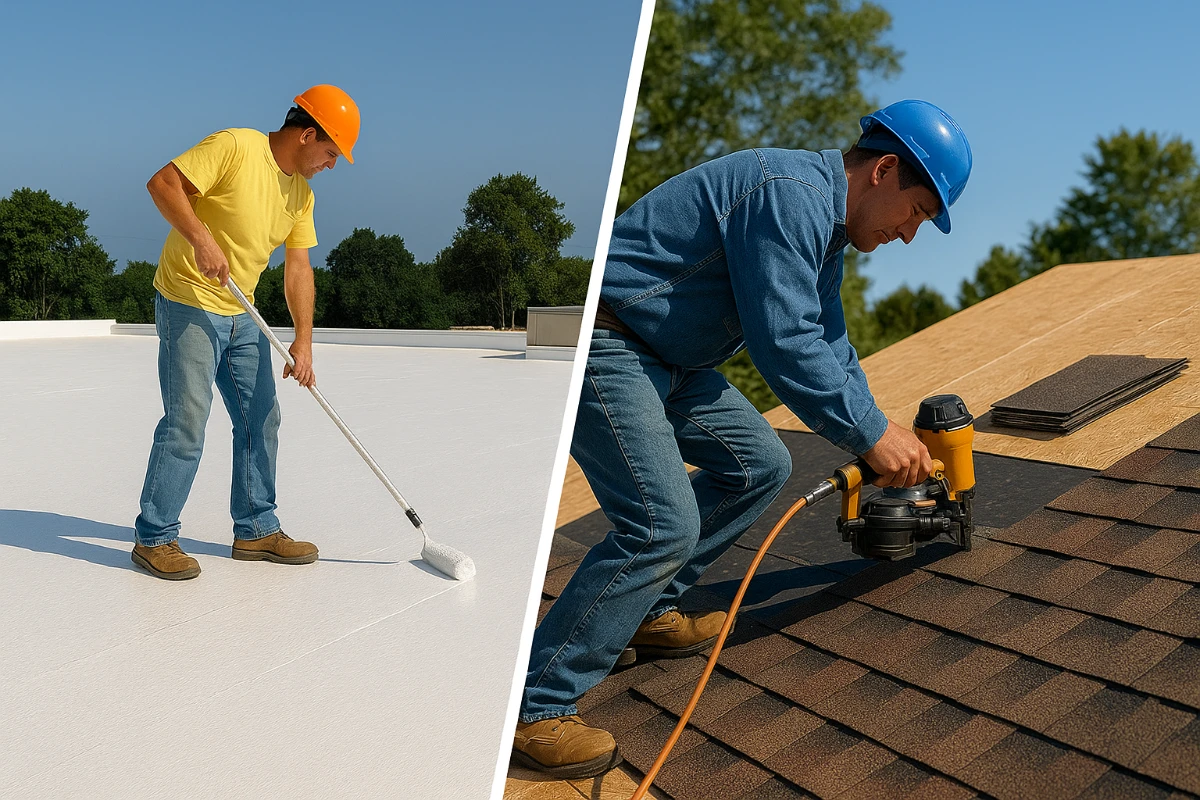
Re-Coating vs. Re-Roofing is a key decision for many building owners looking to extend the life of a commercial roof without committing to a full replacement. A roof coating can often seem like the smarter choice—and in many cases, it is. A properly applied coating can protect against sun damage, reduce cooling costs, and even seal small cracks. But it’s not a miracle fix.
Some roofs have damage that goes deeper than a coating can handle. Applying one in those cases could end up costing more in the long run. Understanding the difference between a roof that’s ready for coating and one that needs replacement can save you thousands of dollars and prevent costly surprises down the road.
What Roof Coatings Can Actually Do
For commercial properties with large, flat, or low-slope roofs, coatings can be a cost-effective way to improve performance and extend life. But they only work under the right conditions. Here’s what they can (and can’t) accomplish.
Extend Lifespan (to a Point)
A high-quality coating creates a protective barrier that reduces wear from sunlight and rain. On structurally sound roofs, it can add 5 to 10 years of serviceable life. The key word here is “structurally sound.” A coating won’t repair deeper problems like deteriorated insulation, water-damaged decking, or weak seams.
Think of it like painting over rust on a car. It might look better temporarily, but the underlying corrosion will continue to spread. The same principle applies to roofing. If moisture has already penetrated the system or if the membrane has lost its structural integrity, a coating becomes a temporary cosmetic fix rather than a genuine solution.
Seal Minor Cracks and UV Damage

Coatings are well-suited to seal surface-level defects. They can address small splits, pinholes, and UV-related wear before it leads to bigger problems. Modern elastomeric coatings can bridge hairline cracks up to 1/16 inch wide, providing a seamless barrier that moves with the roof’s natural expansion and contraction.
However, anything deeper than surface damage will likely continue to worsen beneath the coating. Cracks wider than 1/8 inch, areas where the membrane has pulled away from the substrate, or sections with underlying moisture issues require more substantial repairs before coating becomes viable.
Improve Energy Efficiency
Reflective coatings can deflect a significant amount of solar radiation, helping reduce cooling costs. The best white reflective coatings can achieve solar reflectance values of 85% or higher, compared to 5-15% for typical dark roof membranes. For commercial buildings in Florida where air conditioning is a major operating expense, this can translate into measurable energy savings, often 10-20% reduction in cooling costs during peak summer months.
But those benefits depend on having a clean, intact roof beneath the coating. Dirty coatings lose their reflective properties quickly, and coatings applied over wet or contaminated surfaces may fail within the first year, eliminating any energy benefits.
Provide Waterproofing Protection
Quality coatings form a monolithic membrane that eliminates many potential leak points. Unlike traditional roofing materials with seams, properly applied coatings create a continuous barrier. This is particularly valuable for older roofs where seam failure is becoming a concern but the overall membrane is still serviceable.
Coatings can also help address ponding water issues to some degree. While they shouldn’t be used as a primary solution for drainage problems, they can provide additional protection in areas where water tends to collect temporarily after storms.
Signs a Roof Coating May Be Enough
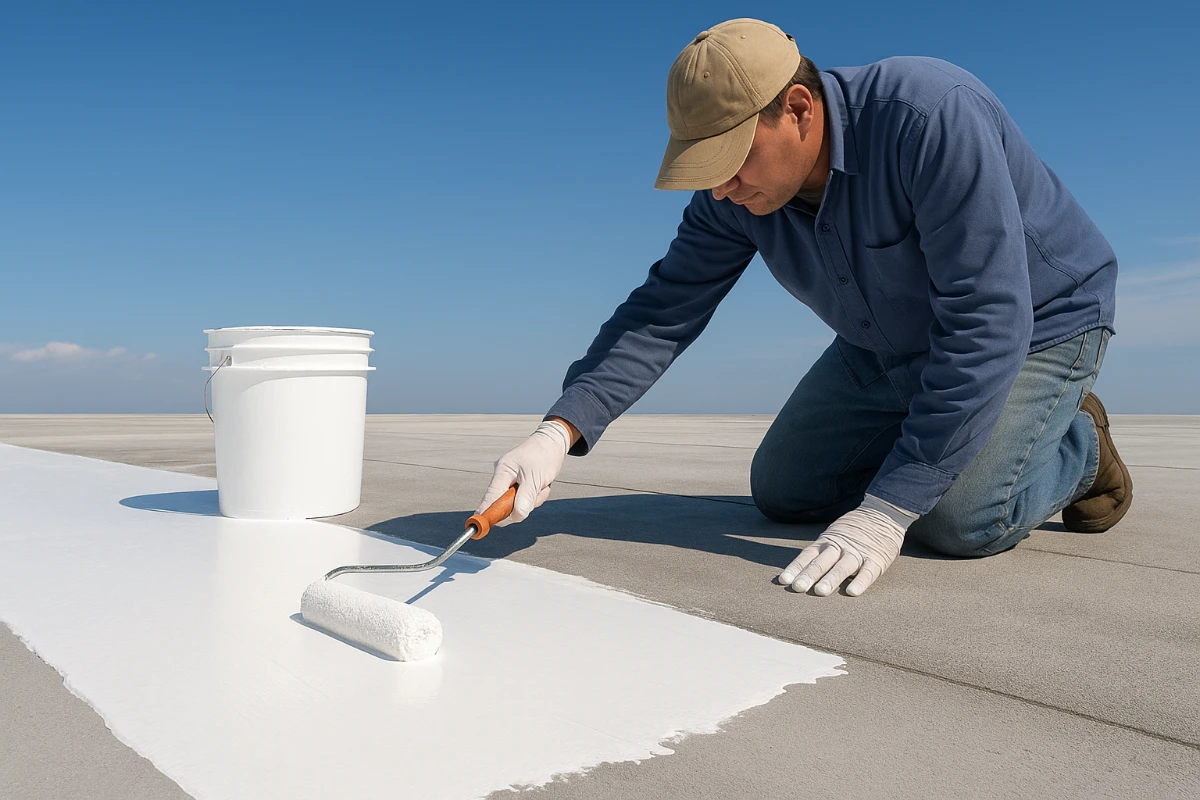
Not every commercial roof showing signs of wear needs to be replaced. In many cases, a professional coating can extend the life of the existing structure while deferring a larger capital investment.
Coating may be a suitable option if:
- The roof is not currently leaking or only has isolated, minor leaks that can be properly addressed before coating
- The structure underneath is solid, with no signs of sagging, soft spots, or water intrusion
- UV damage or surface erosion is present, but the membrane is still intact and well-adhered
- The building has proper drainage and ventilation systems that prevent moisture buildup
- Previous coatings (if any) are still well-bonded and in good condition
- The roof deck shows no signs of deterioration or water damage
- Flashing and penetrations are in good condition and properly sealed
Additional Considerations
- Age of the System: Roofs under 15 years old are generally better candidates for coating, assuming they’ve been properly maintained. Older systems may have hidden deterioration that makes coating less cost-effective.
- Maintenance History: Roofs with documented regular maintenance and prompt leak repairs are more likely to benefit from coating. Poor maintenance history often indicates underlying problems that coating won’t solve.
- Building Use: Some commercial buildings generate more moisture or have processes that create challenging conditions for roofing systems. Restaurants, manufacturing facilities, and indoor pools, for example, may not be ideal candidates for coating due to high humidity or chemical exposure.
For building owners managing tight maintenance budgets or long-term asset plans, coating offers a way to maintain protection without disrupting operations. That said, this strategy only works if the existing roofing system is stable. Coatings applied over compromised or saturated substrates can fail quickly, leading to greater expense.
Flat or low-slope commercial roofs are typically the best candidates, especially if they haven’t been coated more than once before. Too many layers can reduce adhesion and make it harder to identify hidden issues like moisture pockets or delaminated seams.
When Re-Roofing Is the Better Choice
At some point, patching and recoating stop being cost-effective. If your roof is nearing the end of its life or showing extensive signs of failure, replacement is often the better investment.
Re-roofing should be considered if:
- Leaks are recurring or widespread across multiple areas
- There are signs of trapped moisture, soft insulation, or rot in the decking
- Previous coatings are peeling, blistering, or detaching from the substrate
- The system is approaching or has exceeded its expected lifespan (often 15 to 25 years depending on material)
- Structural issues like sagging or deflection are present
- Multiple repairs have been needed in recent years
- Energy costs are consistently high despite HVAC system maintenance
The Hidden Costs of Delaying Replacement
In commercial settings, the risks of delaying replacement go beyond water damage. Leaks can disrupt business operations, damage inventory, and lead to liability issues if left unaddressed. A patchwork of quick fixes may seem economical in the short term but can become a maintenance drain over time.
- Business Interruption Costs: Even minor leaks can force temporary closures, relocate operations, or damage valuable equipment and inventory. For retail businesses, water damage can create unsafe conditions that drive customers away.
- Insurance Implications: Many insurance providers take roof age and condition into account. Older roofs may be subject to higher premiums or coverage exclusions unless they are replaced. Some insurers require documentation of regular maintenance and may mandate replacement after a certain age or condition threshold.
- Property Value Impact: A new roof can increase the value of the property and make it more attractive to future tenants or buyers. Conversely, an aging roof that requires frequent repairs can be a significant liability in property transactions.
- Code Compliance: Roof replacements provide an opportunity to bring the entire system up to current building codes, which may have changed significantly since the original installation. This can include improved insulation requirements, upgraded drainage systems, or enhanced wind resistance standards.
Get Expert Help in Lakeland Before You Decide
The decision between coating and replacement shouldn’t be made based solely on upfront cost. Consider the total cost of ownership, including energy savings, maintenance requirements, and business disruption risks. A thorough evaluation from a professional roofing company can provide the objective analysis needed to make an informed decision.
The team of Lakeland roofers at Stronghold Roofing & Solar works with businesses across Florida to evaluate roofing systems and recommend solutions that fit your budget and building use. Whether you’re looking to extend the life of your current roof or plan for a full replacement, we can help you make an informed, strategic decision that protects your investment and supports your business operations.
Reach out today for a free roof estimate!
FAQs – Re-Coating vs Re-Roofing
How long does a roof coating last on a commercial building?
Most coatings last between 5 and 10 years, depending on the product, surface preparation quality, and environmental exposure. Premium coatings with proper maintenance can sometimes achieve 12-15 year service life, while budget products or poor application may result in failure within 2-3 years.
Can a commercial roof be coated more than once?
Yes, but each existing coating layer must be in good condition and well-bonded to the substrate. Too many layers can cause adhesion issues and make it difficult to detect underlying problems. Most manufacturers recommend no more than two coating applications before considering replacement.
Is coating more affordable than replacement?
Upfront costs are typically lower for coating, but the long-term economics depend on many factors. If extensive repairs are needed before coating, or if the coating fails prematurely, replacement may be more cost-effective. A proper financial analysis should consider 15-20 year total costs.
How do I know if my commercial roof is suitable for coating?
A professional inspection including infrared moisture scans, core sampling, and adhesion testing is the best way to determine coating suitability. Visual inspection alone is not sufficient to identify hidden problems that could cause coating failure.