Skip to content

Skylights are a favorite feature for many homeowners, and it’s easy to see why. They fill rooms with natural light, reduce the need for artificial lighting, and can even make a space feel larger and more open. In a sunny climate, they’re often seen as a way to bring the outdoors in.
But skylights also have a reputation for being one of the most leak-prone areas of a roof. When Florida’s heavy rain meets weakened seals, damaged flashing, or poor installation, the result can be stained ceilings, mold growth, and costly repairs. Understanding why skylights leak and what can be done about it is the first step in protecting your home.
Popular Types of Skylights
Skylights come in different designs, each offering its own benefits and challenges. Knowing which type you have can help you understand where leaks are most likely to occur and how to prevent them.
Fixed Skylights
Fixed skylights are the simplest option. They don’t open, which means there are fewer moving parts that can wear out or fail. Homeowners often choose them for living rooms, kitchens, or any area that could use more natural light.
While they tend to be less leak-prone than venting skylights, problems can still develop if flashing wasn’t installed correctly or if seals around the glass begin to age.
Venting Skylights
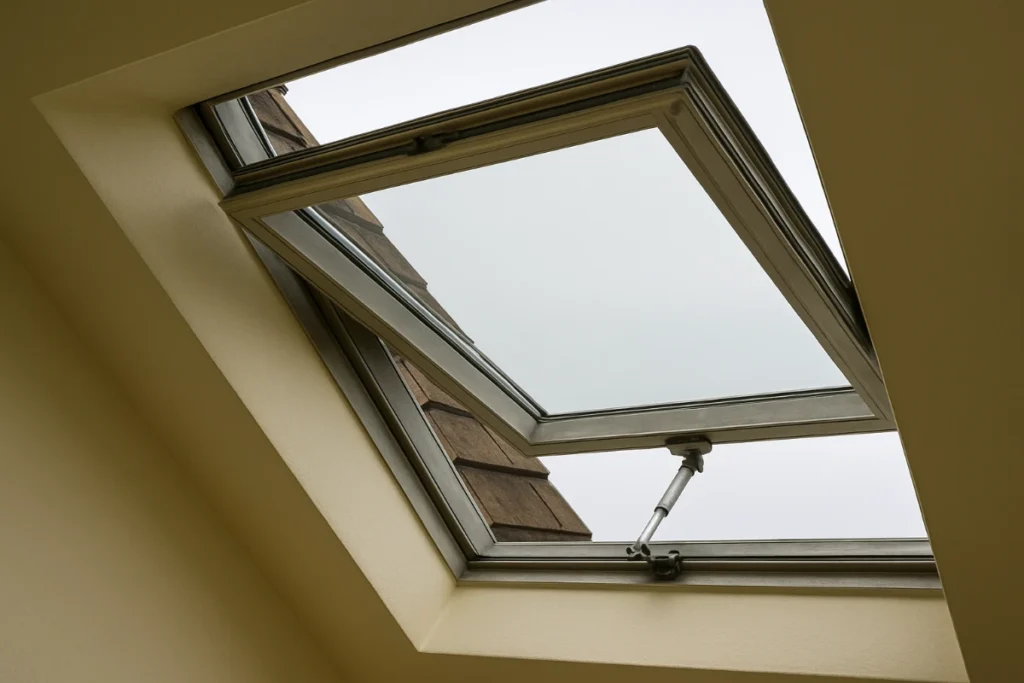
Venting skylights are popular because they provide both light and airflow. They can be opened manually or electronically, making them especially useful in bathrooms, attics, and kitchens where ventilation helps reduce moisture.
The downside is that the more parts a skylight has, the more maintenance it requires. Hinges, handles, and seals all provide extra places for water to sneak in if they are not properly maintained.
Tubular Skylights
Tubular skylights, often called sun tunnels, are smaller and designed to bring natural light into tight or windowless areas like hallways, closets, or bathrooms. They consist of a reflective tube that directs sunlight into the home.
Because they are smaller and don’t open, they usually pose less of a leak risk. Still, the flashing where the tube meets the roof must be installed carefully and checked over time, especially in areas that face heavy rain.
Custom Skylights
Some homeowners choose large, uniquely shaped, or multi-pane skylights to make a dramatic design statement.
These can transform the look of a space, but they also bring added risk if not installed correctly. Custom shapes and larger surface areas require special flashing and sealing techniques. If even one small area is left vulnerable, Florida’s storms can quickly turn a design feature into a source of leaks.
Why Skylight Leaks Happen
A skylight is essentially a window built into your roof. That means it faces more stress than windows on the walls of your home. In Florida, skylights deal with intense heat, daily humidity, and sudden downpours. Over time, this combination wears down the materials that keep water out.
Leaks often start small, showing up as faint stains or a drip during heavy rain. Left alone, those issues can spread into bigger problems like rotted wood, mold, and structural damage. Catching the early signs and knowing what causes leaks gives homeowners a better chance at stopping them before they turn costly.
Common Causes of Skylight Leaks
Here are a few of the most common reasons that skylights leak.
Poor Installation
A skylight that isn’t installed correctly is more likely to leak from the start. Gaps in flashing, shortcuts in sealing, or improper placement can leave openings for water to work its way inside. Even the best skylight won’t perform well if it wasn’t put in right the first time.
Damaged Flashing
Flashing is the metal that seals the skylight to the roof, and it takes the brunt of Florida’s storms. High winds, heavy rain, or falling debris can bend or loosen it. Once flashing is damaged, water can slip underneath and into your home.
Worn or Cracked Seals
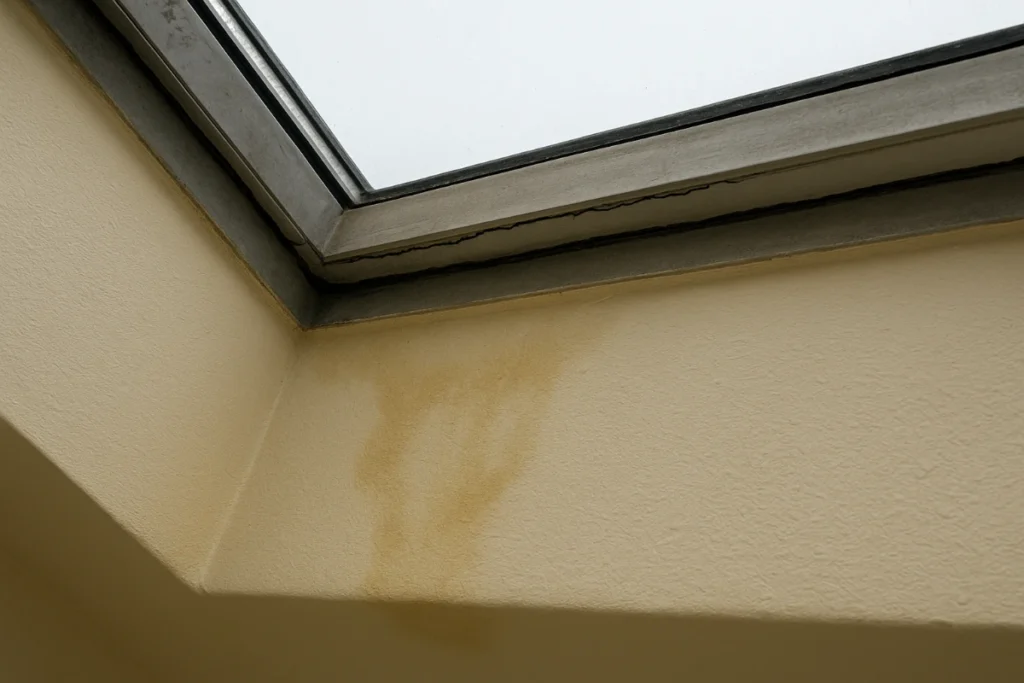
The rubber seals or gaskets around skylights eventually break down under heat and humidity. As they crack or shrink, small gaps form, and those gaps let rain in. These problems often go unnoticed until stains show up on ceilings or walls.
Condensation Misunderstood as Leaks
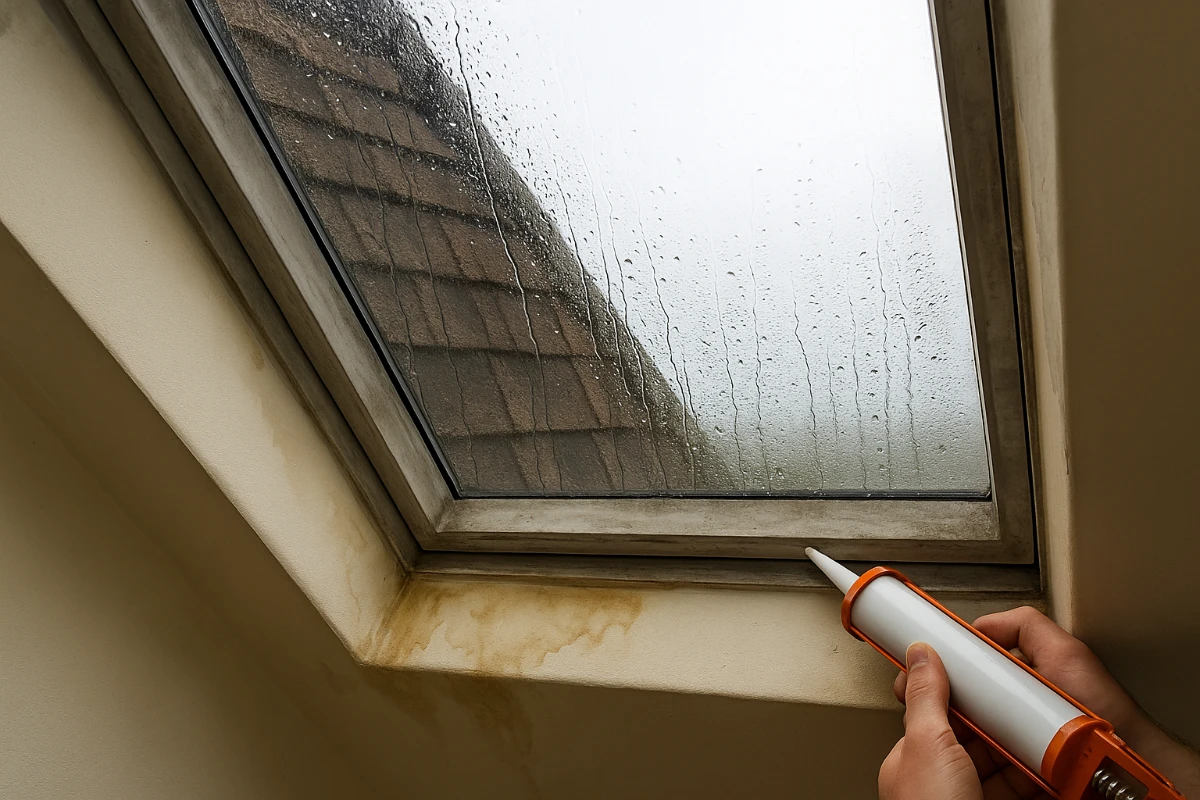
Not every wet spot around a skylight is caused by a roof leak. In warm, humid climates like the Sunshine State has, condensation can collect on the cooler glass surface and drip down. It can look like a leak, but the source is indoor humidity, not rainwater. Knowing the difference helps homeowners decide whether they need a roofer or just better ventilation.
Fixes and When to Call for Help
Some skylight problems can be handled with simple maintenance, while others need professional attention. Knowing the difference helps homeowners avoid making a small issue worse.
For minor concerns, a few steps may reduce the chance of leaks:
- Clear debris from the roof and skylight area. Leaves and branches can block water flow, causing it to pool and find its way inside. Keeping the area clean helps water drain properly.
- Apply roofing-grade sealant to small gaps. If you notice a tiny crack where the skylight frame meets the roof, a bead of sealant may provide a temporary fix. This is only a short-term solution, but it can help keep water out until a roofer can inspect it.
- Manage indoor humidity. When excess moisture builds up indoors, condensation can drip from the skylight and look like a leak. Proper ventilation or using a dehumidifier can reduce this issue.
For anything beyond these simple steps, calling a professional roofing company is the safest choice. If flashing looks bent, seals are cracked, or leaks return after you’ve tried basic fixes, the problem is likely beyond a DIY solution. A roofer can determine whether the skylight can be repaired or if replacement is the better investment.
It’s also important to consider the age of the skylight. Most skylights last 15 to 20 years. If yours is approaching that range and has started leaking, replacement is often more cost-effective than repeated repairs.
In fact, many roofing contractors recommend replacing skylights whenever a roof is replaced. Even if the skylight isn’t leaking yet, the surrounding flashing and seals are being disturbed during the roofing process, which makes it the ideal time to install a new unit. This helps avoid leaks in the future and ensures your skylight’s lifespan matches your new roof.
A professional installation ensures that flashing, seals, and roofing materials are properly integrated, reducing the chance of future leaks and protecting your home from costly water damage.
Stronghold Roofing & Solar: Your Lakeland Skylight Experts
Dealing with a skylight leak can be stressful, especially when Florida’s weather leaves little room for error. That’s why it pays to have trusted Lakeland roofers on your side. Stronghold Roofing & Solar has years of experience installing, repairing, and replacing skylights in Florida homes.
Whether you need a simple repair or a full replacement, our team understands how to properly integrate skylights with your roof so they stay watertight for years to come. We also recommend and handle skylight replacement during roof installations, ensuring your skylights last as long as your new roof.
With expert installation and regular inspections, you can enjoy the natural light and beauty of skylights without worrying about water intrusion. Call today for a free roof estimate.
FAQs | Skylight Leaks
What are the signs of a leaking skylight?
Common signs include water stains on the ceiling or walls around the skylight, dripping during heavy rain, or visible cracks in the seals.
Can a skylight be repaired, or does it need replacement?
Some minor issues, like small gaps or loose flashing, can be repaired. If the skylight is old or has recurring leaks, replacement is usually the better long-term solution.
How do I tell if it’s condensation or a leak?
Condensation usually forms as droplets on the glass and happens in humid conditions, even when it’s not raining. A true leak will show up as water spots, staining, or dripping during or after rain.
Are skylight leaks common in Florida homes?
Florida’s heat, humidity, and frequent storms put extra strain on skylights, making leaks more common if they aren’t installed or maintained properly.